Tuesday, December 9, 2014
Sunday, December 7, 2014
Thursday, November 27, 2014
Monday, November 24, 2014
Tuesday, November 18, 2014
Special Effects in Animation and Live-Action
My first two term paper scores were 93 and 89; I will not be writing a third term paper.
Sunday, November 9, 2014
Physics Outline 3: Effects in Movies
Intro
For this paper I will be analyzing one of the most popular visual effects in movies; destruction physics. Destruction physics are incredibly important in movies trying to increase the drama, danger, or to show the pure destructive power and force of something or someone. This is illustrated in live action movies like Transformers 4, and in animated movies like The Croods. Both movies showcase destruction to illustrate a dangerous force or enemy that the main characters must deal with.
Paragraph 1- Transformers 4
-Final battle destruction of city
-Shows power of giant robots
-Layers of effects required for destruction
-realistic dust
-Debris breakup patterns are realistic
-Example of FX used just for the sake of FX (lockdown riding in on an explosion)
-Visually successful, story wise superfluous
-Shows destruction on the ground realistically
-Industrial Light and Magic
Paragraph 2- The Croods
-Rock destruction throughout the film
-Illustrates the force of nature that the characters must adapt to
-Rock destruction shape is sharp, debris rushes towards camera to make the audience tense
-Visually accurate and supportive of story
- Multiple layers required to composite together scenes of destruction
-Destruction shapes adjusted depending on how close the camera is
-Dreamworks used in house programming for the destruction
Conclusion
Friday, October 24, 2014
Science Fact or Cinematic Fiction?
Transferring Energy Through Impact in Films
I love watching films and I love to see that the filmmakers put thought into the physics of a world, especially when superhuman forces are at work. I’ll even allow laws to slide when the film is supposedly set in the future, and advanced technology can be used as an excuse for why something should be possible. In this paper, we will be looking at altered movie physics related to Momentum/force impact, or what kind of force is required to stop a moving object. When an object is stopped suddenly, the momentum energy is released in the force of its impact. Ordinarily the force of the impact would be lessened by reducing momentum, but that is also rarely used in movies unless it adds to the dramatic effect. Movies often bend or completely break this law to make actions seem more dramatic, or to show a character’s power. This is true in live-action movies as well as animated cartoons.
I absolutely love Batman and the mythos surrounding him, and most of what he’s able to do is explained away by his incredibly advanced tech and weaponry. At the same time, Batman is a huge deal as a hero because he is supposed to be a mortal man, who will take very real damage if he is hit. In the movie he even has his back broken by a villain, further illustrating his ‘only human’ characteristic. This first scene is from The Dark Knight Rises, and is a scene where characters on screen stop suddenly after nearly reaching terminal velocity. If you catch someone falling at terminal velocity and you do nothing to slow-out their fall, they will still experience massive damage. In The Dark Knight Rises, prisoners in the deep pit tie a rope around their abdomens for safety as they climb the walls. When Christian Bale ties the rope around his abdomen and falls, there is no way he didn’t hurt his back or break a few ribs when it jerks taut. He also just had a recent devastating back injury, so he would be even more vulnerable to injury. Rescue operations personnel are equipped with full body harnesses to distribute the impact of a sudden drop on their body, ensuring the least amount of bodily harm occurs as possible. Rock climbers also wear a harness that allows the impact of suddenly stopping to be distributed into their hips and legs, the hip joint bending easily to absorb impact. So while Christain Bale’s Bruce Wayne did use a thick rope to prevent being cut in half from the impact, he still would have severely hurt himself. Additionally, the top of the rope was secured to the side of the wall, and in the event of someone falling, they would have swung right into the wall at full speed, most likely killing them.
In animated movies, the laws of physics are often broken more than in live action movies. For example, the amount of force applied that can throw someone across the room and into a wall will kill them. In The Incredibles, Mr. Incredible punches his boss Mr. Humphry across a room and through several walls. Not only did he go through all of the walls, but he went through all of them at the same height, meaning he went fast enough to go through all of them before gravity started to take effect. This should have killed him, but he is instead put into a full body cast to show the damage. While the force required to knock his whole body through a wall is significant, the initial force required to throw him through the air and through several walls would have killed him. The sudden impact on his body from someone with super strength would have broken bones and probably caused internal trauma. In the world of the movie, however, it does help to set up the rules of the universe. Normal humans in the movie easily experience heavy damage when up against heroes, therefore elevating the power of a hero in the audience’s eyes. Admittedly, this is also a cartoon, and cartoon characters are often portrayed as far more durable than real-life people, so most audiences approach cartoons without keeping real world physics in mind.
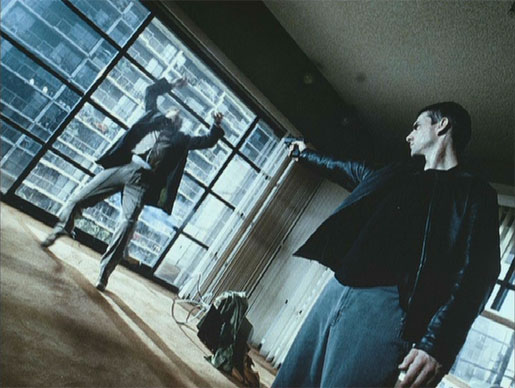
In many movies, it is popular to show a character being blown backwards out of frame from a gunshot. This is completely un-true, as these people are often said to be killed by the bullet. A bullet does not have a wide-area of energy dispersal, so someone who is shot without wearing a bullet-proof vest will not be thrown back by the force. They would, however, drop to the ground after being shot and suffer massive internal injuries. In Minority Report, a man is shot with enough force to throw him through a window behind him. He is not wearing a bullet-proof vest for the bullet to spend its momentum force into, which means that it slowed to a stop inside of him or exited out of his body. But most importantly, this is especially impossible since the force used to throw his body backwards would have had an equal and opposite force on the gunman who fire the bullet. As it is shown in the scene, the gunman doesn’t even move from the recoil and barely even jerks backwards as he fires the gun.
Movies most often bend the laws of physics for dramatic purposes, and the laws of Momentum and force impact are no different. However incorrect and misleading it is to viewers, it gives the film more drama and action scenes feel even more amazing when the laws are broken. I think movies easily wouldn’t be as fun if their makers kept strictly to completely accurate laws of physics. We would never get to feel that extra kick of emotion that is ‘movie magic’, and we wouldn’t get to expand our own imaginations with the stories told on screen without breaking these laws. For the sake of films, emotional imagery trumps logic every time, and laws sometimes need to be bent to allow for super-humans or exceptional technology.
Monday, October 20, 2014
Outline of the Second Term Paper
Intro
In this paper, we will be looking at altered movie physics related to Momentum/force impact, or what kind of force is applied to stop a moving object. It is also related to the amount of force used to send an human flying, and if a human can even survive the impact. Movies often bend or completely break this law to make actions seem more dramatic, or to show a character’s power.
Body
- If you catch someone falling at terminal velocity and you do nothing to slow-out their fall, they will still experience massive damage.
- In The Dark Knight Rises, prisoners in the deep pit tie a rope around their abdomens for safety as they climb the walls. When Christian Bale ties the rope around his abdomen and falls, there is no way he didn’t hurt his back or break a few ribs when it jerks taut as he falls. He also just had a recent devastating back injury.
- The amount of force applied that can throw someone across the room and into a wall will kill them.
- In The Incredibles, Mr. Incredible punches his boss Mr. Humphry across a room and through a wall. This should have killed him, not just given him a neck injury.
- A bullet does not have a wide-area of energy dispersal, so someone who is shot without wearing a bullet-proof vest will not be thrown back by the force.
- In Minority Report, a man is shot with enough force to throw him through a window behind him. This is especially impossible since the gunman clearly has no recoil as he fires his gun.
Conclusion
Movies most often bend the laws of physics for dramatic purposes, and the laws of Momentum and force impact are no different. However incorrect and misleading it is to viewers, it gives the film more drama and action scenes feel even more amazing when the laws are broken.
Tuesday, October 14, 2014
Monday, September 29, 2014
The Laws of Physics in the DC Universe
Justice League
Physics
Few things have captured the
imagination quite like super heroes, and some of the most popular heroes are a
part of The Justice League, made by DC comics. Super powers have been portrayed
in comic-book format for years, but when they move to live action and
animation, subtle physics effects need to be taken into account in order to
make what is being seen more believable. Physics are invented and broken in the
movie Justice League: War for theatrical effect and to give the heroes and
villain more visual gravitas, especially during combat. One of the main
invented elements that require its own set of physics is a character’s ability
to fly. Since humans cannot fly, and nothing known to man can fly without the
use of wings, a completely new element needed to be invented. Sometimes the
element that allows characters to fly is visible, and that often ties into the
character’s own unique abilities that tend to be energy-based. However, when a
character possesses these powers, they appear to be able to bend a law of
motion that would otherwise force them to take a cinematically long time to
start or stop moving. The use and abuse of this law is frequent with characters
that seem to possess natural enhanced speed, allowing inhuman speed to come
easily to them.
Almost all of the
heroes in the Justice League possess the ability to fly, and appear to require
some sort of energy field that exerts an invisible force around them. The best,
most dramatic example of this in the entire movie is when the villain Darkseid
comes to Earth and floats above the water. When he’s attacked and thrown
towards the water, it ripples around him while he regains his footing in the
air. When Darkseid is preparing to take off with a great amount of force, the
water boils under his hand due to the intensity of the energy field increasing.
Heroes also exert a field of energy during flight, and Green Lantern’s ring
exerts enough energy to make the water ripple bellow him while he flies. The
energy field also appears to affect the air surrounding the user, as seen when
Superman clears smoke around him without even having to move.
Unlike most heroes
that can fly, Shazam’s energy field and Green Lanterns energy field are
visible, and they are able to clearly manipulate their energy fields to use
tools or fight. Both heroes’ energy fields are visible whenever they are on
screen, and both of them extend their energy fields to use them in combat. For
Shazam, he is able to align electrons in the air and adjust positive and
negative charges to create lightning wherever he needs, as seen when he calls
down lightning to transform. His energy trail also has secondary motion, as
seen when Darkseid uses him to fling lightning bolts at his teammates. Shazam’s
control over his energy field is also apparent in the scene where he creates a
sustained lightning strike on him and Cyborg. Alternatively, Green Lantern’s
energy field is visible by a light-emitting green halo that constantly covers
his entire body. His energy field is generated by the ring worn on his finger,
and he can project it into solid constructs of his own choosing. This ‘energy-crafting’
is seen as he seals Batman into a box, and as he creates a giant robot to
destroy Darksied’s evil minions. Unlike Shazam, Green Lantern’s energy field
guidance requires a lot of mental focus because he is using a tool, while
Shazam’s energy field is a natural part of himself. The need for mental focus
is clear due to some exposition by Batman, further implying that the use of the
energy-field gifted by the ring requires practice and training.
Finally, the DC universe
appears to grant any hero with super-powers the ability to completely bypass
needing to slow in or slow out after they’ve been moving at super speed. This
law is broken multiple times by Superman and The Flash on screen. Ideally, in
order to move quickly they would need to steadily gain speed from a still
position. Like-wise, to stop quickly they would need to steadily decrease in
speed before coming to a still position. An example of this is used when The
Flash skids dramatically to a halt after running really fast. But this same
character can bolt at inhuman speeds immediately and stop immediately without
have to skid to a halt. This is visible in several scenes were he approaches
Batman, stops after arriving at STAR Labs, and stops behind Green Lantern.
During all of his take offs he also does not have a visible ‘slow out’.
Superman also does not appear to require slowing out, instead stopping
instantly in front of Batman and allowing his wake to blow by him.
In conclusion, the
invention and use of strong or enhanced energy fields and their physics
absolutely adds to the gravitas of super heroic power, as well as looking
incredibly appealing on screen. When the energy fields affect the surroundings
of the hero, it increases how intimidating they are, and gives the viewer some
hint about how massive their energies are. Even artificial energy fields, like
the one created by Green Lantern, affect the environment and give a visible
representation of the energy being emitted. The use of visible energy fields
also adds to a character’s visible abilities, explaining their energy-based
attacks and often including exposition about how their powers work, or through
hints in the effects on screen. More than simply inventing an element that
requires its own physics, the DC universe frequently disregards the slow-in and
slow-out requirement of movement. It is a very effective and selective choice
to break or modify the use of this law in a universe with amazing and fantastic
powers. This not only gives a hero more perceived power and control over their
own bodies, but extra animation is not required to show them dealing with the
laws of motion.
Sunday, September 21, 2014
The Law of Physics In "Justice League: War" -Outline
Intro
Animated
film chosen is Justice League: War (80 min)
Thesis:
In a world full of superheroes, physics are pushed for theatrical effect, and
invented to give some credibility to the powers of heroes.
Body
1. Flight or levitation appears to require an energy field
- Water ripples when Green Lantern flies
too close to it
- Darkseid greatly effects the water in a
wide-area when he’s punched into it
- The water boils under Darkseid’s hands when
he pushes himself to fly
2. Shazam can align electrons in the air and control
positive and negative charges to control electricity
- In
order to transform, Shazam can call down lightning strikes when there is no
storm
- Shazam
can sustain lightning strikes for longer than they occur naturally
- He is
constantly surrounded by a visible electrical field
- His
field is so volatile that it can be thrown and flung
3. Heroes only require slow-outs when it benefits the drama
of a shot
- Flash
dramatically skids to a stop after running from something
- Flash
doesn’t need to stop when he approaches Batman
-Flash
doesn’t need to stop when he appears at STAR labs
- Flash
doesn’t need to stop when he pauses behind Green Lantern
-
Superman can stop in the air without slowing out at all
Conclusion
-Hero abilities are given visible
physics to make them appear more believable, and to make them appear more
formidable.
Tuesday, September 16, 2014
Video Analysis of Path of Action
Still Frame showing tracker information
Single Jump with Tracker (You don't even have to press play!)
Original Reference Footage
Put a bird on it!
Tuesday, September 9, 2014
Sunday, September 7, 2014
Saturday, August 30, 2014
Mini-Portfolio
My name is Nicole Chen and I'm currently studying Animation Illustration at SJSU with a Story Boarding emphasis. I've loved drawing my own characters since middle school, and I discovered Story Boarding when I arrived at San Jose State. Bellow is a personal project that I have recently completed called 'Steakout'.
I also like to paint on occasion, and have recently gotten into understanding color-harmonies is paintings. Bellow is a painting I did for my 117B class in Fall 2013. The story behind this one is that Anna-Purna, the goddess of Food, has begun to appear in the poor city of Calcutta to feed people.
Here is an idea for a short film I helped do Storyboards on. The timing and music were all done by Justin Vu.
I've taken all of the SJSU A/I required courses (ART 28, ART 24, ANI 14, ANI 55, ANI 50, ANI 51a&b, ANI 112a&b, ANI 113, ANI 114, ANI 115, ANI 116, ANI 117a&b), and am currently in BFA. The only science classes I have taken at SJSU are Anthroplogy and Geology. When I graduate I want to work in film or television doing storyboards.
On a more personal level I try to keep up with TV and love to watch movies. Right now I'm all about Transformers Prime, Last Week Tonight, Breaking Bad, Penny Dreadful, Hannibal, TMNT, Rick and Morty, Adventure Time and Steven Universe.
Most Recent Movies Watched are: Guardians of the Galaxy, Casadega (really terrible do not recommend) and The Jackal.
Currently I'm trying to catch up on books and have recently read/are reading: 20,000 Leagues Under the Sea, The Three Musketeers, 10 Japanese Short Stories by Ryunosuke Akutagawa, Game of Thrones and Frankenstien.
Also I love birds. Cute, fluffy birds.
Here is a YouTube video that I loved to watch on a weekly basis:
Monday, August 25, 2014
Subscribe to:
Posts (Atom)